13 March, 2014

The Morality of Liberty

When trying to make the case for liberty, there are myriad ways one can go about it. Most libertarians are staunch supporters of the Constitution and are typically well-versed in what our founding document says and what the Founders' interpretation of it should be. But somehow, when trying to make a Constitutional argument for or against policy X, liberals and conservatives alike have found a way to pervert the meaning and intent of the Constitution by picking and choosing the data that supports their narrative and ignoring the historical evidence that contradicts their opinion.

Likewise, when you try and provide documentary evidence to an ideological opposite that refutes their side's position, no matter how irrefutable the evidence the other side will always find a way to rationalize it away. Studies and statistics and even someone's own words are often no match for cognitive dissonance.


So how does one go about changing minds when someone is determined to ignore the evidence if facts and history can't even seem to do the job? While I think going from conservative to liberal or vice versa is fairly unlikely (although it does happen occasionally), I think libertarians have a much better chance of winning people over to our side. Why is that? Because morality is on our side.

When you have morality on your side, you don't have to have troves of historical texts and a PhD in Political Science to argue the nuances of each and every policy debate. All you have to do is look for the gun in the room. How can you tell if some new law one of our politicians has dreamed up is right, just, moral, and beneficial? Just ask yourself, how many guns have to be pointed at people to make this law happen?

Libertarians will argue that if a gun has to be pointed at someone to make them comply with a law (do not eat, drink, or smoke this, Citizen) then the law is unjust. There is a big difference between laws that uphold and protect personal property -- either your home, business, or your own person -- like laws against theft and murder, and laws that serve to modify behavior in a way that government deems acceptable. As modern day philosopher Stefan Molyneux likes to say, "The law is just an opinion with a gun."


Let's take just one example, and it's one that I've written about before: Obamacare. How many guns are required in order to enforce this law? Well, let's just name the most prominent, egregious ones (let's pretend that Obama hadn't unconstitutionally and unilaterally waived some of these mandates, we're just speaking philosophically here). There is the individual mandate, whereby an individual is forced to purchase a product they might not want or even need (health insurance) or face fines enforced by the IRS. If you don't buy the product, then the State has the right to confiscate some of your property from you using the bullying arm of the IRS. As of now, supposedly there is no further penalty for not paying the fine but who really wants to find out about such things?

Next comes the employer mandate where any business with over 50 people must provide health insurance for their full-time employees. There you have another issue of "force" whereby the government is now holding a gun to the head of business owners across America and saying "You will provide this service even if it is detrimental to your business model and bottom line." It is violating rather than protecting private property rights by substituting the will and judgement of the State and its actors for the judgement of the business owner.

Lastly, there are the coverage mandates that Obama administration has declared that each insurance policy must cover to some degree. These include things like: maternity care (you know, for the 65 year old men who have been doing without all these years), mental health, pediatric services (gay people of America, rejoice!), outpatient services, hospitalization, and a few more. So now the State is pointing guns at insurance companies dictating to them how to run their businesses as well. And with all this gun-waving going around, somewhere in the process over a million people lost their previous healthcare coverage.

That's the funny thing is that trying to achieve something through the use of force and violence almost always produces the opposite effect. Afterall, what's the difference between sex and rape? You can achieve the same result, but one requires time and effort to cultivate the sort of relationship that results in a consensual act. The other requires no nurturing of feelings, just the brute force of one person on another person in a violent, non-consensual manner causing severe physical, emotional, and psychological damage. Using violence to achieve one's means will almost always produce unintended or opposite results of what one is seeking.

This is where libertarians and voluntaryists part ways with their Democratic and, yes, even Republican brethren. Through their belief in the Non-Aggression Principle, those who believe in liberty recognize that the initation of force by an individual or someone acting on behalf of an individual (like a government) to be unjust and immoral. The position of liberty is the only moral position out there. It is the only position that does not profess to want to wave a bunch of guns in the face of citizens worldwide to force them to comply with their views. Do some see this as utopic? Sure. But it's no more utopic than the notion that if we can just wave enough guns in the face society through the creation of thousands upon thousands of laws and regulations then we will finally create equality and justice for all. If we are all striving for utopia, which utopia is the one more worth pursuing? The utopia based upon peaceful, voluntary relationships and interactions advocated for by libertarians and other liberty loving individuals and enabled through the free market? Or the utopia based on forced compliance at the hands of the State which needs armies of people in uniform and with guns and badges to enforce their will?

If you just look for the gun in the room, it becomes easy to refute all the various harebrained schemes our politicians throw out at us without having to become an expert on each and every law. All it requires is that you ask yourself a few basic questions: Does the law require the initiation of force on the part of the State? Does the law benefit one group of people at the expense of another group of people? Does the law require taking something from one person and giving it to someone else to whom it does not belong? Does the law interfere with voluntary relationships entered into by mutually consenting adults? If the answer to any of these questions is 'yes' then the law is unjust and it must be opposed.

While a society based upon voluntary and peaceful interactions will not be the perfect society as there will always be bad actors in any culture, it will still be an inherently more moral society than any society currently being dreamed up by the powers that be in the Congresses and Parliaments throughout the world. As Tacitus once said, "The more corrupt the state, the more numerous the laws." And as we now know, the law is nothing but an opinion with a gun.



27 February, 2014

Life Got You Down? Blame Government

Are you happy? Are you satisfied with your job, making good money, have a loving family that you spend loads of time with, you're in perfect health, have no debt, got a good education, plenty of money in the retirement account, own a nice home that you're able to update semi-regularly, take vacations annually, and all the rest? I mean, that's the American dream, isn't it? The one we've been taught is achievable in America and nowhere else because of our grand, unrelenting commitment to freedom and individuality. Or are some or all of those areas lacking in your life?

I was thinking about it earlier and I'm quite certain that most of the discontent we experience in our lives can easily be found with its roots in government. There are some out there who think corporations are the world's greatest evil, but do corporations have as much influence over your day-to-day life as government does? Can corporations hold a gun to your head and make you pay for goods and services you don't want? Can corporations be absolutely inefficient, fail in their mandates and missions, lose money year after year, steal from you, fine you for not buying their products, violate your civil liberties and still count on you giving them your business? No, of course not. They have to earn your business. Government just points a gun at you and forces you to do business with them and on their terms only. That's not to say that there aren't bad corporations out there with evil business models, but once again that's because of government enabled cronyism. While businesses and corporations can cause minor hiccups in our day-to-day lives (ohmgygawd, I just spent 30 minutes on hold with Verizon #hearthisassholes), it's the ever-present leviathan of government hanging over our heads, like an eternally cloudy sky that you don't even notice anymore (but once you're "awake" you  notice it all the time), that causes us the most misery.


For example, are you or a family member sick or suffering from chronic pain and you can't get your hands on the drugs you need to treat it? That would be government's fault. Government is keeping marijuana, medicinal and otherwise, illegal and off market in many states. The FDA is the one holding up approval on potentially life-saving drugs, drugs that terminally ill patients are more than willing to risk their already dying lives to take in the hope that it might give them a few more precious months or, God-willing, years on this earth. The market is trying to bring life-saving drugs to the people who desire it at affordable prices. The only reason you can't have them is because of government laws, red tape, and regulations. Food and drug safety and efficacy can be proved by various private, competing entities and get safe drugs to market much faster than the several years-long process it takes for the FDA to complete its studies.

Moving on, what about your quality of life and finances? Are you happy in your job, following your dreams and passions? No? Why not start your own business? Maybe start small and work out of your home? Oh, because your local government regulations prevent home businesses? Hmm, well how about you become a professional of some sort? Oh, you don't have the right government licensing for your floral shop or interior design degree? Understandable. I can see why we need the government to protect us from the dangers of unlicensed florists and interior designers. Or from the horrors of a bad haircut. The stuff of nightmares really. Well why not go back to school to pursue that degree you've always wanted? Too expensive? Was that Amazon's fault, or Ebay's? Hmm, don't think so. When government will hand out or subsidize student loans for everyone with a pulse, it increases demand. The only way to satisfy demand and create equilibrium in the market is to raise prices. Rising prices means it's less affordable, so we need more student loans. Oh vicious circle! And many in government insist that we must make it our goal that every child in America receive a college degree. Because there's no better way to render something completely valueless than by making sure everyone has one. But if you still think that going into debt to get that online degree from Phoenix University that every Tom, Dick, and Harry is now trying to get will finally give you the leg up you've been looking for, be my guest. However, if it doesn't work, you know who to blame <whisper> government.

Have you taken your annual vacation this year? Full two weeks? No debt? Trying to figure out what exactly it is you're saving all that money for anyway? No? Walmart charging you too high of prices again so you can't save money? Or could it be something else.... You see, our government thinks it can control money. They think that they can solve all of our economic woes by printing money or otherwise manipulating the currency. You'll hear our politicians claim that inflation is a good thing. Government will tell you that rising prices makes everyone wealthier because, you know, I never feel richer than when I pay $4 for a gallon of gas that only cost $3 last year. Your home is worth more, but with that food prices keep rising, gas prices keep rising, the cost to heat and cool your home keep rising, but the price of iPads is falling so there's that. I hear they're quite tasty when baked and feed a family of four quite easily.


 Despite the constantly rising prices that you've been told make everyone wealthier, you can never quite figure out what happens to your paycheck each month. And while your home might be valued at $250k, you can't manage to sell it because who's able to save $50k for a nice, respectable 20% down payment? Nobody! But that's okay. Government to the rescue again! They'll subsidize agencies like Fannie and Freddie to give you a loan for as little as 3% down, no savings needed! What could possibly go wrong? Without government, who would force banks and other entities to give out loans to people to buy overpriced homes they can't afford? Wait, don't tell me...Walmart. Amiright?

Not only is your paycheck being eaten away by the insidious hidden tax known as inflation, it's also being eaten away by the never-ending string of overt taxes we're subject to. Sales tax, income tax, payroll tax, property tax, hotel tax, rental car tax, airfare tax, death tax, inheritance tax, capital gains tax, corporate tax, the not buying a product you don't want tax (aka Obamacare), excise tax, gasoline tax, utility taxes, telephone usage tax, cigarette tax, luxury tax, gift tax, gambling tax, lotto winning tax, IRA early withdrawal tax, vehicle sales tax, and on and on and on. Really, though, they're doing you a favor. The government steals this money from you and makes it harder to make ends meet each month because if they didn't you would probably spend it irresponsibly. It's much better that they spend it irresponsibly for you.

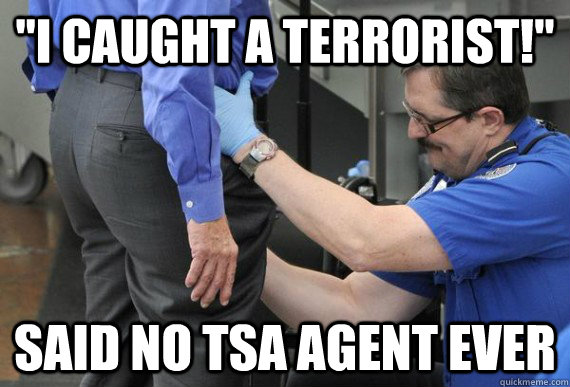
"But," you may say, "I'm willing to pay those taxes because I get important government goods and services in return." Like pothole free roads. And pleasant, stress-free visits to the DMV. And an easily navigable and affordable justice system that works for the little guy. And over 700 military bases all over the world. I'm sure if the government weren't stealing your money from you every two weeks you would willingly donate that money to the military bases in Germany and Japan that are so imperative to our safety. You can never be too safe, after all. Which is why I thank the Lord every time I go to the airport and get groped down, nude scanned, or irradiated that my money was taken from me forcibly to pay for my safe travels. Granted, they've never caught a single terrorist no matter how much money I give them but I'm sure it will pay off one day. Given how greedy corporations are, I know American Airlines and Southwest have zero interest in keeping their flights and passengers safe and therefore would not be willing to provide adequate security measures for their passengers; it would eat into their bottom line after all. Terrorists would just keep hijacking their planes and Jetblue would be all like "That's cool. Any publicity is good publicity, right?"


Don't even get me started on companies like Apple. How dare Apple invade countries like China and give those Chinese workers jobs they would never have had otherwise so that Americans can buy highly innovative and desirable products that have literally changed human life at reasonable prices!? If Apple were more like government, they would have invaded China with the Apple Army they keep on retainer, destroyed Chinese cities to build their factories (for which the Chinese should be grateful), used their Army to take out all competition, and then hired a bunch of union workers to charge $20/hr to work no more than 8 hours a day so that in 10 years time they could sell you a phone the size of your shoe for $5000 and then balked at you if you weren't grateful to them because if it weren't for them you wouldn't have a portable phone at all dontchyaknow?

I could do this all day, but stop for a moment and just think about it. Who controls the money? Government. Who controls interest rates on money? The Federal Reserve. Who determines the type of currency we use? Government. Who prints the money that causes inflation? The Federal Reserve. Who forcibly takes money away from us to pay for things we don't want (and maybe a few things we do)? Government. Who controls your education? Government. Who controls your food? Government. Who controls your healthcare? Government. Who controls your retirement? Government. Let's not even think about this in the left/right paradigm. These things are true no matter which party is in power and have been for half a century now or more. It's time to wake up. It's time to open your eyes. It's time to see what's really going on here. It's time to join the revolution. As Katniss Everdeen was told in book 2 of The Hunger Games: Catching Fire as she was battling for her life against her competitors in the Capital-controlled games, "Remember who the real enemy is." I promise you it's not Walmart.       


23 February, 2014

The 'D' Word...

One of the most misunderstood and controversial positions of libertarianism is the freedom of (dis)association. The PC buzzword for it is now 'discrimination'. This has been popping up more and more recently, primarily in regards to news items about private businesses "discriminating" against gays. In Kansas, for example, their House passed a bill allowing businesses to discriminate against gays based on religious grounds. The bill died in the senate just days later but not before major media networks picked up on it and created a frenzy among gay rights advocates and supporters thereof.

Just on its heels comes another major piece of state legislation up for approval in Arizona which asserts almost the same rights as the bill in Kansas, that businesses can deny service to gays based upon religious grounds. This bill is currently awaiting approval or veto from Governor Jan Brewer. 


Such legislation has been the result of a few high-profile cases of businesses discriminating against gay customers, like the cake baker who refused to bake a wedding cake for a gay couple or the innkeepers in the U.K. who wouldn't let any unmarried couples, gay or straight, occupy the same room.

Let me be clear, I am not anti-gay. I gave monthly donations to the Human Rights Campaign for over a year before having to cut back due to finances. I favor allowing adoption for gay couples. I am in support of gay marriage. That being said, I also believe in private property rights and free speech. Private property entails being able to do what you please with your own property, including inviting (or not) people of your choosing to visit or do business with you.

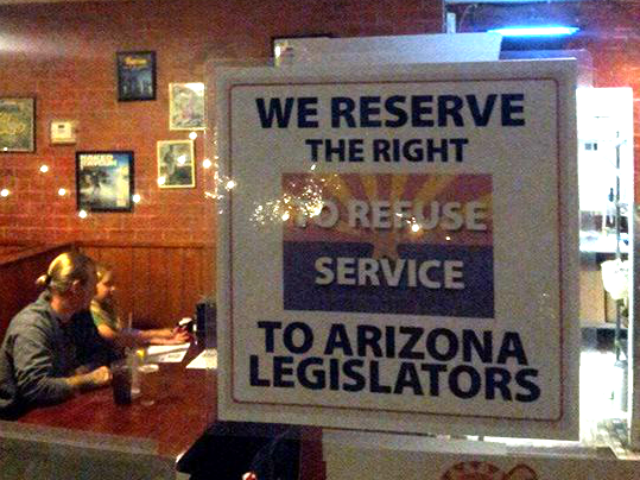
Would anyone condemn a black store owner who refused to do business with a skinhead? I don't think so. Why is it okay for the skinhead to be denied service but not a gay person? Recently, acquitted killer cop Manuel Ramos, who was found not guilty for the savage beating death of a mentally ill homeless man, was forced out of a restaurant by fellow patrons. In response to the legislation in Arizona, some storefronts are posting signs reserving the right to refuse service to Arizona legislators. George Zimmerman is assuredly not welcome at many establishments he might like to frequent. There should be no problem with any of this. Each of these businesses has the right to discriminate against the skinheads, George Zimmermans, legislators, saggy pants wearing teens, or gay people of the world. Government's only role in any of this should be to enforce the rights of people to use their private property how they see fit.

Do I agree with the discriminatory practices of denying gays service? Of course not. But I do defend the right of people to conduct their business according to their beliefs. Much like Voltaire famously said, "I may not agree with what you say, but I will defend to the death your right to say it." I will also defend the rights of the consumer to boycott, petition, write negative reviews, or otherwise inform people of the discriminatory practices of these businesses. No government action is required.

Art Carden explains it another way in his article about this same topic. In his words,
"Calling on government to purify others' hearts and minds opens Pandora's box, pushes us farther down a very slippery slope, and invites all sorts of other hackneyed cliches. I hope that people find discrimination on the basis of race, religion, sexual orientation, physical "handicaps," and other arbitrary criteria morally repugnant. I do. However, my disapproval of another's attitude does not give me the right to use force to correct their erroneous ways. Indeed, it may backfire."
Precisely. What proponents of anti-discrimination laws are really calling for is for men with badges and guns to force others to accept the beliefs, ideas, or values of someone else. Forcing others to believe the same as you do through government's monopoly of force is not the best way to deal with people with irrational beliefs. Art Carden summed up his article like so,
"When we use force to restrict others' liberty, we endanger our own.
Governments coerce others with a two-edged sword: giving the state the power to do things you like necessarily requires giving the state the power to do things you don't like, and giving the state the power to restrict behavior of which you don't approve gives them the power to restrict behavior of which you do approve. The right way to change hearts and minds is not coercion. It is persuasion."
One final point about all this, and I will hat tip one of my favorite interweb figures, The Libertarian Homeschooler (find her on Facebook here, her blog can be found here, she is on Instagram @thelibertarianhomeschooler, but alas is not on Twitter yet despite my pleas). When we ban something, be it a substance or a behavior, all we do is drive that behavior underground and out of sight. It doesn't mean that behavior is eliminated. It just becomes secret and when it becomes secret, it can't be addressed either in society or in the market. Let's put it this way, wouldn't you rather know up front that you're dealing with a bigot and make the decision yourself to do or not do business with that person? Or would you rather unknowingly subsidize their bigotry by still giving them money because they have to keep their idiotic thoughts to themselves? I would prefer to knowingly vote with my dollars and give my money to non-bigots than unknowingly give it to bigots. Bigots also have the right to not want to accept money from people who wish to do business with them in exchange for services.

We all discriminate all day, every day for various reasons and based on dozens of criteria, not all of them rational. Nay, it's the only way to base a decision. Walter Block contends in his book The Case for Discrimination that "...discrimination -- choosing one thing over another -- is an inevitable feature of the material world where scarcity of goods and time is the pervasive feature. There is no getting around it. You must discriminate, and therefore you must have the freedom to discriminate, which only means the freedom to choose. Without discrimination, there is no economizing taking place." We pass by various store fronts and either decide to shop there or not based on the silliest reasons: the font of their store front, the neighborhood it's in, a friend of a friend of a friend said her aunt's hair dresser had a bad experience there. Heck, I'm amazed to see work trucks that have political bumper stickers on them. Passing by certain trucks I do think to myself "Gee, I guess I know who not to do business with now, clearly they're a bunch of dumbasses." Is that right of me? Probably not. But I'd bet dollars to donuts that we've all had crazy thoughts like that and have made decisions based on far less of criteria. Should we all go to jail or be fined?


I would prefer to live in a society where we can openly talk about these things and engage our neighbors in peaceful attempts to change hearts and minds instead of driving the problem underground. Will it end bigotry? Unfortunately not. But neither will enacting laws that essentially amount to thoughtcrime that must be enforced by the modern day equivalent of the Thought Police. In the end, we must decide whether discrimination is an issue that we would rather be decided in the public sphere by government, whose only tool of persuasion is the barrel of a gun, and the necessary increase in power it gives to government which can and will be used against us all one day, or whether we think we as a society can be trusted to do the right thing on our own and slowly, yet peacefully learn to exercise tolerance for those who are different from us.


11 February, 2014

Living in the Twilight Zone

Every day some new headline or soundbite pops up that literally makes me want to beat my head against a wall. A couple weeks ago, it was the president's State of the Union address in which he declared, to thunderous applause, that he was going to bypass Congress whenever and wherever he could and use his pen and his phone to pursue his economic agenda.

Echoing this sentiment and in a show of support, Democratic Rep. Sheila Jackson-Lee recently went on record by saying that writing up a number of executive orders for the president to sign should be "our number one agenda". No doubt she was one of the ones cheering when Obama announced during the SOTU that he would make her and others like her entirely irrelevant by bypassing Congress this year in his "year of action".


And yet, members of Congress aren't the only ones cheering. Millions of Americans who believe that Congress is hopelessly deadlocked and not doing enough to help businesses create jobs and get the economy chugging along also applaud the words and actions of the president and his Democratic cohorts to legislate by executive order. While Democrats have no problem with this currently with Obama in office, now that they have willingly given this power over to the executive, what will they do when a Republican gets into the White House and wants to do the same thing? Of course they will be crying bloody murder, but once you give over this power, you cannot un-give it. There are no takebacks. You cannot expect it to not be utilized by the next occupier of the White House. And why do you suppose the Republicans in Congress haven't more forcefully opposed this, perhaps by taking action to block these unlawful uses of executive actions? Mayhaps it's because you would be fooling yourself if you believed Republicans won't gladly wield this power to their own advantage the next time one of their own reclaims the high command.

Over the past few years, since I've been "awake", I've noticed an incredible amount of intellectual dishonesty that is rampant not just amongst our legislators but amongst the general public as well. How else can you explain the silence of the left, supposedly the champions of civil liberties, in the face of the complete evisceration of our Bill of Rights from the Obama administration? The conservatives who were cheerleading Bush and his use of torture and the creation of the "Patriot" Act have now begotten a president who claims the power to indefinitely detain and even murder American citizens on the mere suspicion of terrorist activity or associations. When you allow a person of authority, particularly a head of state, unchecked powers, don't be surprised when they use it. And don't expect to rein in their newly found power without a fight.


Now for the latest cringe-worthy soundbite which comes to us courtesy of Rep. Keith Ellison who hilariously intoned that the latest CBO findings in which they project that the 2 million job losses that are expected to come due to Obamacare will, get this, "allow for people to have more free time and be able to cook dinner at home". Ha! This reminds me of a similar claim made by the loony toon Nancy Pelosi who said that the death of the 40 hour work week due to Obamacare's redefining "full-time employment" will free people up to pursue their happiness and follow their passions. What planet do these people live on? This is not freedom for those people who need a steady 40 hour (or more) work week in order to pay for the continually rising prices of everyday items due to the inflation created by the Federal Reserve's crippling monetary policy. Who actually believes this crap that representatives like Ellison and Pelosi try and shove down our throat?

Yup, welcome to the Twilight Zone, where we've now blatantly handed all power over to the executive, where the president possesses the power to assassinate any American anywhere at anytime based upon secret evidence that only he and his team possess, where we now allow American citizens to be indefinitely detained without charges on the mere suspicion of terrorism or being associated with terrorists, and where losing a paying job with benefits now qualifies as freedom from the burdens of an honest day's work and not, rather, further struggle to make ends meet. When will Americans finally wake up? I'm tired of living in the Twilight Zone.


30 January, 2014

So This is How Liberty Dies

There was a lot of BS spewed during last night's State of the Union address but I'll just focus on one or two things that really irked me.

The first is Obama's proclamation that he's going to sign an executive order mandating a wage increase for all new federal contracts. I haven't gone over the speech with a fine tooth comb, but I don't recall hearing President Obama mention the Constitution once in his over an hour long speech. Maybe I missed it. Maybe he paid lip service to it in some distorted way once or twice. But since our so-called Constitutional scholar of a president seems to have forgotten what's written in it, here's a reminder. From Article 1, Section 1 of the Constitution:
"All legislative powers herein granted shall be vested in a Congress of the United States, which shall consist of a Senate and House of Representatives."
Article 1, Section 1. As in, that's the very first thing that our Founders wanted us to be aware of in our new republic. We do not have a king. Our president cannot unilaterally start governing and making laws from the bully pulpit. I don't care who they send out there to tell you otherwise (<cough> Eric Holder <cough>) or what Orwellian language they use to justify it, it's right there plain as day in front of our faces that all legislative powers are vested in the Congress of the U.S., not within the president. Notice how there is no exception in there about certain cases when there is gridlock in Congress that maybe then the President can start making his own laws. Nope, no exceptions. Our system was designed to work this way. Our Founders wanted a governing body to do less, not more. Gridlock was a function, not a flaw, of their design.

Nonetheless, today during a Senate committee hearing, Eric Holder tried his best (which was a lot more tepid than some of his other attempts at justifying clearly unconstitutional actions from the executive) to justify Obama's use of executive action to raise the minimum wage for federal contract workers. After a few hesitant and uncertain responses, Holder finally obstinately answered Senator Mike Lee's line of questions by saying “I think there’s a constitutional basis for it, and given what the president’s responsibility is in running the executive branch, I think that there is an inherent power there for him to act in the way that he has." Of course he said that.

Eric Holder is also the one who has somehow found Constitutional authority for presidential kill lists and indefinite detention of the U.S. citizens. If he can defend that, what can't he find Constitutional authority for? More importantly, what authority won't our citizens grant our overlords if they'll accept the absurd notion that our government has the authority to keep secret kill lists and kill whoever they want based upon secret evidence unviewable by the public that they assure us proves the guilt, and therefore justifies the death, of their target? But I digress.

Constitutionality aside, even if the president did have the authority to mandate wage prices (he doesn't), a presidential decree still cannot override the laws of economics. Just because an overlord wills it so, it does not mean that raising wages can magically fix everything and make everyone rich and we can all live happily ever after. If that were the case, why don't all those poor countries just mandate that all the employers stop being assholes and start paying their employees a living wage? Duuuh!


 It's unclear at the moment how many people Obama's wage hike
will benefit since it only applies to new federal contracts, but apparently it will apply to contractors like janitors, food servers, and dish washers. How will these wage hikes be paid for? That's also unclear. If government contractors aren't directly employed by the government, then they aren't directly being paid by the taxpayers. However, if all these contractors do is hand the government a bill for their services, which the government can pass off on to someone else (the taxpayer, the printing press, or China), then it appears that these contractors don't have as much to worry about in meeting the demands of our president, unlike a true private employer who would have to find a way to either increase profits or cut costs to pay for the increase in labor wages they have to pay.

To add insult to injury, not only are Obama's executive orders unconstitutional, not only do they defy the laws of economics (at least in a competitive, private sector job they would), but during the SOTU speech, when Obama announced that he would "bypass Congress whenever and wherever he could" he received thunderous applause! Members of Congress actually applauded when the president said that he would go ahead and bypass them, the elected legislative body, the only ones under Article 1, Section 1 of the Constitution who can create laws, and act without them. I propose that those members of Congress are the first to start receiving the new federal minimum $10.10 wage as they've clearly show that's all their worth. Check out all the feedback from the Twitterverse when he made that statement.

What will it take to wake America up? If our Attorney General can sit in front of our elected officials and justify secret kill lists, indefinite detention, and legislating through executive action, all to the applause of our body politic, what won't we let them get away with? Where does it end? When will our representatives start doing their job and holding the executive responsible instead of just holding hearing after hearing where they might talk in angered tones but after which there are no consequences for anyone over anything? So this is how liberty dies...with thunderous applause.


12 January, 2014

3 Myths About Libertarianism Debunked

I'm baaack! Many apologies to anyone who reads this semi-regularly for my delay in posts. If you've read my bio, you know that my full-time job is as a yacht crew member and the end of the year is always crazy for us. Since December, I've been working 12-16 hour days almost every day, which leaves very little time, energy, or motivation to even keep up with current events nonetheless blog about them! But things have settled down a bit for now so I'll try and bang out a couple of blogs in the next week or two before things get crazy again.

Today, I want to tackle a few of the prominent misconceptions that seem to plague libertarianism that its detractors either don't fully understand or don't care to. Let's dive in.

1) Libertarians don't care about the poor, sick, or elderly
Really? I mean, really? Do you really think there is a huge, growing swath of individuals who really could care less if their own grandmothers died or that there are poor children in the U.S. and elsewhere without food to eat? Of course libertarians care about the elderly, poor, and sick. We just have a different notion of how to deal with social problems than many others.

First of all, we don't believe that using State initiated violence will ever be the way to solve any sort of complex societal problem. Problems like poverty and poor healthcare are extremely complex and have many origins. Using the state's monopoly on violence to rob individuals of their wealth to redistribute to other politically favored groups is hardly a panacea to problems that require more than just someone else's money to solve.

Contrary to popular opinion, libertarians don't want to throw granny off the cliff

Individuals, businesses, and communities need to be empowered to deal with the unique situations that each of them face that lead to lack of healthcare access or income inequality. While having access to resources, including money, is certainly part of solving any big scale problem, stealing someone's money and then handing it out to politically connected individuals and businesses does not appeal to libertarians who prefer to let people and businesses keep their money and voluntarily give their resources to charities and businesses that they believe do good work in helping to alleviate these problems.

Let's think about this for a second. If there was no Social Security, no Medicare, no Medicaid, or any other programs of those types, given the number of people who obviously care about access to healthcare and who wish to end world poverty, do you think all those millions of individuals would just sit idly by as people were dying in the streets because there was no government healthcare or safety net set in place for retirees? Or do you think that out of those millions of people in the U.S. who clearly care about the sick and elderly that maybe a few thousand of them across the nation might somehow take it upon themselves to start up organizations, charities, or businesses that address these problems and come up with any number of solutions unique to their location? Of course, we would all be much richer and have more resources with which to start such organizations, donate to them, or just to put towards aiding members of our family and friends because we wouldn't be robbed of a quarter of our money with each paycheck we take home to pay for the government-mandated solutions and the bureaucracy required to administer them.

Many libertarians much smarter and more prominent than me have dedicated many thousands of words and pages outlining a myriad of solutions to societal problems that don't require using State violence to rob citizens of their money and apply one size fits all solutions to these problems (see here, here, and a good one here for just a few examples). Perhaps the naysayers should check out some of these writings before just issuing blanket insults inferring that libertarians don't care about the sick, elderly, and poor just because we advocate addressing some of these problems using voluntary means rather than top-down, State-mandated solutions achieved through their monopoly of force and violence.

2) In a libertarian society, corporations would take over
One of the biggest myths about libertarianism comes from the majority of society being unable to distinguish between capitalism and crony capitalism. Despite tens of thousands of pages of new regulations passed and an ungodly number of pages added to our bloated and labyrinthine tax code each year, some people still operate under the misconception that we operate under some sort of "free market" system in the US. Similarly, despite over 100 regulatory agencies "overseeing" Wall Street and the banking industry, the crisis of 2008 is somehow blamed on the "unfettered free market" and "laissez-faire capitalism".  

While libertarians are certainly proponents of capitalism and free markets, what we have in the U.S. today is not anywhere close to a free market. Libertarians decry any sort of taxpayer funded corporate bailout like TARP, championed by conservatives and liberals alike, or any taxpayer funded corporate subsidy for that matter. In a libertarian society, corporations would have to earn their gargantuan status without the help of any sort of government privilege or taxpayer assistance. Despite what many liberals believe, regulations actually help many of the giant corporations and in fact are lobbied for by them because they know that their smaller competitors who operate under thinner profit margins cannot bear the cost of the added burden of compliance. 


Libertarians also differ from many conservatives in this regard in that while libertarians are pro-free markets and pro-capitalism, conservatives are more pro-business. There's a huge difference between the two because pro-business often means conferring special privileges on certain businesses or industries often under the guise of job creation or aiding the economy. Libertarians favor oil industry subsidies no more than they favor green energy subsidies; conservatives can make excuses for giving oil subsidies while denying green energy subsidies and vice versa. In other words, despite paying lip service to getting government out of people's pocketbooks, conservatives often have no problem finding some tax payer money in the coffers for their favored industries. As for liberals, despite their anti-corporation rhetoric, they certainly don't mind when their favored businesses receive taxpayer subsidies or get bailed out either. Libertarians are the only ones ideologically consistent in this position.

By denying the government the power to pick winners and losers in the market through subsidies, burdensome regulation, and costly new taxes, a libertarian society creates an environment where competition thrives and it's much harder to become a mega corporation without providing desired goods and services and treating employees fairly. In short, we would see fewer corporations, not more, and those corporations would achieve their status through fair means of competition, not cronyism, benefiting consumers and employees alike.

3) Libertarians are isolationists
If I had a nickel for every time I saw "libertarian" and "isolationist" in the same sentence, I could probably retire happily. This erroneous term is often used deliberately in neoconservative circles when they wish to smear libertarians for wanting to not spend another several hundred billion dollars fighting another war we have no business entering into.

Let's get this straight, North Korea is isolationist. They don't allow people to enter or leave their country, they engage in trade with virtually no one, reporters are rarely allowed to enter their country, and almost nothing is known about their culture and way of life except what information they allow to be disseminated.

Libertarians, by contrast, do not wish for the US to be like North Korea. We advocate free trade with everyone, including supposed enemies like Cuba and Iran, in the belief that trade between nations often fosters goodwill and friendship and reduces the likelihood that the parties will want to engage in a conflict with one another. We do not want to shut down our borders to outsiders and we encourage legal immigrants to enter our country and make a living. I fail to see how any of these beliefs make libertarians "isolationists".

Nonetheless, neoconservatives, and nowadays even liberals, like to invoke the term "isolationist" when they're trying to fearmonger us into another conflict or intervention. Libertarians prefer the term "non-interventionist" instead which more accurately depicts our views on foreign policy. We prefer the Constitutional approach to foreign policy in which we are authorized to defend our nation's borders and provide for a strong national defense, but not police the world and try and circumnavigate the globe wasting lives and resources trying to eradicate every baddy that ever lived and who's ever uttered a negative word against America.


John Quincy Adams instructed us that "America does not go abroad in search of monsters to destroy. She is the well-wisher to freedom and independence for all. She is the champion and vindicator only of her own." As we enter a second decade of conflict in Afghanistan at an almost incalculable cost in lives, money, and resources, our views are everyday becoming more vindicated.

Even today, headlines are screaming out about a resurgence of al-Qaida in Iraq despite the hundreds of thousands of Iraqis already killed in a conflict we entered into based upon lies and propaganda and a war chest comprised of more money than every other country in the world combined. What does it say when the country with the largest, most expensive, and most powerful military in the world can't even keep one small country free from terrorists for more than a year? Maybe it says that we aren't being told the full story as to why these people hate us, which is why we can't win a conflict with them. Maybe it says that unless we commit to full occupation of the Middle East for the next 100 years as John McCain proposed, that we're fighting in a war we can't win and will only spawn ever more terrorists. Perhaps al-Qaida's resilience in Iraq has more to do with our decades long occupation and intervention in their land and affairs than the laughable notion that they hate us because we can eat Big Macs and they can't.

And yet the big government champions in both parties, including today's leadership of the supposed anti-war left, would have us enter into even more conflicts in Syria, Yemen, Pakistan, and now they are even sending troops into the depths of Africa. It will never end so long as we keep believing the myth spoon fed to us by our politicians that all this death and destruction is somehow good for the economy and job creation and keeps us safe from harm.

Libertarians certainly don't argue that there aren't bad people who have done bad things overseas, but our argument is that our intervention into their affairs has not made things better for their citizens and have actually made us less safe, not more, within our own borders. Our money and the lives of our men and women who have bravely chosen to serve our country are better served by actually defending our borders, not by meddling in the affairs of nations that never have and never will pose a direct threat to us.

Ron Paul continues his legacy as the champion of non-interventionism through his new think-tank, the Ron Paul Institute for Peace and Prosperity. There, you can find loads of articles cutting through the warmongerer's BS as he continues his advocacy for a peaceful foreign policy and the protection of civil liberties at home.

While there are certainly many more myths about libertarianism out there that make me facepalm myself on a daily basis, I would say that these three are certainly some of the most common. Most of these misconceptions could be cleared up easily if people would take the time to actually read and educate themselves about libertarian philosophy rather than just foolishly believe that we advocate for something we haven't fully thought through. Hopefully this article or any of my others might inspire you to find out more about libertarianism. Given that it's not something we're ever taught in school nor will you find any fair treatment in it in the mainstream (or even alternative) media, you must seek out the information yourself, something I do every day of my life in order to become better informed.


24 November, 2013

Are libertarians Being Co-Opted Like the Tea Party Was?

In light of last night's announcement from Pres. Obama proclaiming that they had struck a deal with Iran to curb their nuclear enrichment program, supposedly in the interest of preventing Iran from attaining a nuclear weapon despite their repeated claims that they don't want one, I've seen some surprising reactions from those who run in libertarian circles.

Libertarians are supposed to be non-interventionists. Libertarians are supposed to believe in the Constitutionally granted power of a strong national defense, which they have traditionally interpreted to mean maintaining a strong defense at home by securing our borders but also by rejecting the notion of nation-building and entangling interventions abroad. I commonly use a quote by America's 6th president, John Quincy Adams,
"America does not go abroad in search of monsters to destroy. She is the well-wisher to freedom and independence of all. She is the champion and vindicator only of her own."
Libertarians rallied around Ron Paul's message of non-intervention and his criticism of the United States' counterproductive foreign policy in the 2008 and 2012 elections. I was immediately drawn to this message myself. As I admitted in my last blog, I was fooled by the empty promises of Obama when he was campaigning. I believed his anti-war rhetoric and thought we would reverse the damage done during the Bush years. When I realized fairly quickly that Obama had no intention of reversing course and, in fact, doubled down on many of Bush's policies, I went searching for new answers and found Ron Paul.

In his debates during the 2012 primary, Ron Paul was asked many times how he would handle a nuclear Iran. In characteristic departure from the heavy intervention and tactics favored by the rest of the field, Dr. Paul had this to say,
"To declare war on 1.2 billion Muslims and say all Muslims are the same, this is dangerous talk. Yeah, there are some radicals. But they don't come here to kill us because we're free and prosperous. Do they go to Switzerland and Sweden? I mean, that's absurd. If you think that is the reason, we have no chance of winning this. They come here and they explicitly explain it to us. The CIA has explained it to us. They said they come here and want to do us harm because we're bombing them."
When pressed about it further on some of the talk show circuits, Paul expounded on his philosophy of non-intervention and said we might try a different approach with Iran, perhaps offering friendship and diplomacy instead of sanctions and war. "Didn't we talk to the Soviets? Didn't we talk to the Chinese? They had thousands of these weapons." He also warned that all this war talk with Iran sounded an awful like the same propaganda used in the lead up to the disastrous war with Iraq.

That's why I'm surprised to see so many bellicose comments towards Iran and Obama's handling of the situation coming from joiners in some libertarian circles. Prominent liberty movement figure Libertarian Girl posted the Politico release about the new deal with Iran. The comments that ensued were eye-opening to say the least.

  
The above comments are comments that I would expect to see on someone following Sean Hannity's feed or Lindsey Graham's. But these were taken from Libertarian Girl's own feed. I don't believe these were trolls, either. I believe these were people who either consider themselves libertarian or who believe they have enough common cause with libertarians and with what Libertarian Girl has to say to follow her page.

This phenomenon wasn't just unique to Libertarian Girl, either. Another prominent libertarian advocate is Julie Borowski. She often tries to engage dialogue on her page by asking questions to encourage thoughtful commentary and civil discussions amongst libertarians and curious bystanders. In response to the news of the Iran deal, she asked her followers if they would be willing to send their own children off to fight in a war with Iran. Here are some of the responses she got:


Hmmm, this is a far cry from the calls for friendship and diplomacy that Ron Paul was advocating for during the Republican primaries. What's happened? Have so-called libertarians found a special exception to the Non-Aggression Principle in its treatment of Iran? We managed to see through the war propaganda that was thrown at us with Iraq, Libya, and Syria, but now all of a sudden our leaders are trustworthy when it comes to Iran? Why wouldn't we be applauding diplomacy measures with Iran?

Granted, there are certain details in this recent agreement that give me pause, like the fact that we have to bribe them with $4.2 billion dollars for their adherence to this agreement. Some have tried to portray this move as a nefarious play by our Muslim-loving Muslim president to undermine American interests by actually paying Iran with our own money to finish building a bomb.

While I certainly have no love for Obama, nor do I trust him or his administration, I don't see this deal as some backdoor green-light for Iran to build a nuclear bomb during this time frame financed by America's own money. Under the Nuclear Non-Proliferation Treaty, to which Iran is a signatory and Israel is not, countries are allowed to pursue peaceful uses of nuclear energy under the vigilance of the IAEA and have promised to further the goal of achieving nuclear disarmament. The deal struck between the P5+1 would partially lift sanctions and allow Iran to continue enriching uranium at levels deemed allowable in pursuance of the NPT.

But this post isn't meant to be a piece-by-piece analysis of what the new deal does and doesn't do and what it all means. I was inspired to write this piece based on the aggressive reactions I've seen from those who either claim to be libertarians or who run in libertarian circles. Reactions that, to me, would be more typical of a neoconservative, Allen West-worshipping Republican than proteges of a movement inspired by Ron Paul.

In the Twitterverse where things are much more anonymous than they are on Facebook, people tend to group themselves based on interests. Given that I am on Twitter as my blog and not as myself (although really there wouldn't be much difference), my Twitter list is dominated by libertarians, libertarian groups, and various other news agencies, journalists, and political figures.

Every Friday on Twitter is #FollowFriday where people recommend other Twitter users that one should "follow" based on their interests. In the libertarian circles, John Yowan has a long-standing #FollowTrain that he tweets out every Friday encouraging fellow libertarians to band together, retweet, and follow other fellow libertarians. Many of my followers and those who I'm following have come from those follow trains.
 
 
While I've known that there are certain people who participate in the libertarian follow train who aren't purely libertarians (I've seen some identify themselves as "conservatarians"), I didn't realize the extent to which it's been co-opted until news of this Iranian nuclear deal was announced. All of a sudden, my Twitter feed is blowing up with Tweets like this:


And this: 

Does this mean libertarian ranks are being infiltrated? I'm not sure. A more probable explanation is that conservatives who have identified common cause with many libertarian views have felt comfortable running in the same circles so long as the focus is held on the ineptitude of Obama and his administration. Rather than embracing the ideology of libertarianism, which is rooted in its advocacy and adherence to the Non-Aggression Principle, some conservatives are just joining ranks with other anti-Obama like-minded people.

While coalition building is generally positive, libertarians must beware of what happened to the Tea Party when mainstream Republicans took it over. Originally founded as a result of the government bailouts after the housing crisis, the Tea Party was founded on the basis of fiscal responsibility, constitutionally limited government, and free markets. However, it didn't take long for the original intent of the Tea Party, due to its initial popularity, to be overrun by stock-standard, run-of-the-mill Republicans who wanted to jump aboard the popular movement without truly understanding the principles behind it. Soon after, Tea Partiers were showing up at rallies with "Donald Trump 2012" rally signs, hardly the icon of Constitutional governance or fiscal responsibility!

The problem with libertarian ranks being co-opted by the Tea Partiers who, in turn, were co-opted by mainstream Republicans, is that our message gets diluted and lumped together with all the other right wing talking points that the leftists want to bash. They then make no distinction between the corporatism that mainstream Republicans favor and the free-market that libertarians embrace. They think the libertarian cry to end unconstitutional federal programs is to enrich corporations, not because of our objections to the moral issues of force and violence used to steal money to fund these programs.

We also need to continue being the voices of reason on the foreign policy front and not get taken in by the fear-mongering by the same voices who led us to war in Iraq, Afghanistan, Libya, Yemen, Pakistan, and almost Syria. If we opposed going to war in Syria because we didn't consider them an imminent threat, then we have no business getting involved in Iran just because they want to pursue nuclear energy possibilities for their country as allowed by the NPT. If we are clamoring to bring troops home from Iraq and Afghanistan because we're bankrupt and can't afford it, then we can no more afford to start another prolonged engagement in Iran. 

It's important that our message of non-aggression and non-intervention into people's lives stays separate from mainstream conservatism (unless, of course, they want to embrace it for themselves). Because if there's any hope left for this nation, it's in providing an alternative to the broken 1-party system masquerading as a 2-party system. We can't do that if people can't tell the difference between the libertarian message and the Republican message anymore.

What do you think, are libertarians being co-opted? Is it a positive sign for the rising tide of libertarianism that other conservatives want to join in our ranks or do we need to be wary of such alliances? Let me know in the comments!