Yeah, I shopped today. My husband found some extra money tucked away, long forgotten about and wanted to buy me an early Christmas present from Bass Pro Shops. It was actually a pleasant experience. Much more pleasant, I presume, than being forced to wait until Black Friday to go shopping.
We didn't have any family obligations until later in the afternoon so we went over late in the morning. We didn't have to fight our way through horrible holiday bottlenecks near the retail centers as traffic was light. While there were a number of shoppers there, it was not packed and I didn't have to push and shove my way around. We got service right away. I even asked a few associates who worked there how they felt about having to work on Thanksgiving Day. Most of them just shrugged. Nobody seemed particularly excited by it but then again, they all said that no matter what job they had, in their line of work they would have to work the holiday regardless. They all balked when I suggested they could quit and find another job that didn't "force" them to work the holiday.
I've seen just about as many posts as I can take from people decrying
all these evil big box stores for opening up on Thanksgiving Day and
"forcing" their workers to come into work to earn shitty wages rather
than be able to spend time at home with loved ones.
I hate to say it, but I'm primarily seeing this from the liberal busybody do-gooders who seem to know what's best for everyone. This ire seems to be only directed at the perceived "evil", corporate, big box stores like Walmart, Target, Best Buy, JC Penney, and so forth. Apparently, these inherently evil corporations are even more evil for pushing consumerism to boost their profits on a day that should be dedicated to family for the celebration of a holiday that is also very racist and shouldn't be worshiped, according to some of the same people.
I think what irks me the most about this is how these people just automatically seem to know that these retailers are acting greedily and that every single person who was "forced" to work on a holiday hates it, is somehow being forced to act against her will, and would much rather be spending a whole day with their family carving turkeys and making polite conversation with relatives they see but once or twice a year.
My first job in high school was at a local supermarket. We were open for half the day on Thanksgiving days for those shoppers who needed last minute items. We closed early at around 2pm and it was always known that either my brother or I (we worked at the same place) would be working that day. I wanted to work on Thanksgiving because it was always very busy and I might make a few extra dollars in tips. At that age, I always appreciated the opportunity to make more money. We typically planned Thanksgiving around those shifts and didn't start dinner until 3pm or later. No harm, no foul. My mother never got mad at the supermarket for "forcing" me to work rather than allow me to spend the day at home. In fact, she liked it because it allowed me to make that much more money to be able to pay for gas for my car or insurance and take some of the burden off of her. And, at the end of the day, we still got to have a lovely meal together and quality time with one another. Win-win for all!
I was never "forced" to work. I was never threatened with my job if I refused to work due to family obligations. I was not kidnapped from my home in an unmarked van and ferried to work by my employers. Any of the employees who requested the time off got the time off and judging from the number of people who shopped there that day (we were always slammed) there was clearly some perceived value in our being open to accommodate these last minute shoppers. Was my employer, a regional chain supermarket, greedy and profiting off of consumerism? Was it tearing the family unit apart by trying to make a buck off of people's forgetfulness or procrastination? Hardly.
Not only did I go shopping today, I also went to a restaurant to eat
Thanksgiving dinner. None of us have a permanent home in the area so
nobody was equipped to prepare a large Thanksgiving dinner. I was
thankful that there was a restaurant in the area offering a nice
Thanksgiving buffet with all the traditional dishes one would expect in order to
serve those of us who, for whatever reason, couldn't do a home cooked
meal. Does that make me greedy for "forcing" those servers to work to satisfy my desire for a nice, traditional meal with family? I should think not.
I
asked one of the staff at the carving station how he felt about working
on Thanksgiving and he said he didn't mind at all. He said he'd been in
the business for 40 years and it was expected and that there was plenty
of time later in the day to spend time with family. Our server informed
us she only started working there a few days ago. While I didn't ask
her directly how she felt about working that day, presumably she would
not have chosen to start work there if she was too terribly upset about
having to work on a holiday.
These same arguments don't seem to apply to the numerous other professions that are required to work on holidays. Healthcare professionals, civil servants, soldiers, and other people whose work is seen as "necessary" are exempt whereas retail shops are not. The arguments also don't seem to apply to small businesses. I saw many small businesses open today but apparently it's okay for a small surf shop on the beach to be open and make someone come in to work to sell beachwear but not okay for Target to do the same? It's okay to go to the movie theater and make someone pop my popcorn so I can sit mindlessly in front of a huge screen filling my head with pretty pictures that make already rich people richer but it's not okay for Walmart to be open and selling products to people who might not even be celebrating Thanksgiving? It's okay for bars to be open for people to get drunk at but not okay for Best Buy to be open to sell a camera to a guy who forgot his so he could document his day with family? It's ok for concession workers and ticket takers to have to work football games but it's not okay for Sears to be open? I hope you're boycotting watching those football games as well in solidarity with the poor staff that are forced to work on a holiday.
By this same token, shouldn't we decry businesses for being open at odd hours on non-holidays? We should boycott every business that's open past 7pm because people should be at home with their family at that time, not having to work a shitty job at shitty hours. We should never frequent a fast food joint at 3am to get some drunk food because that is demeaning to the workers who have to stay up late to make it for us instead of spend quality time at home. We also shouldn't go shopping on Sundays because that's the Lord's day and we're supposed to be at rest, not forcing the rest of the world into godlessness by our endless consumer greed and making them work on the Sabbath.
The point is, we can't know for sure that we know what's best for these people. We cannot make a value judgement on the situation as a whole and apply it to every individual who is in that situation. We cannot substitute our judgement for theirs. Some people choose to work this day. Some people prefer the option of being able to make more money than not being able to. Some people don't have family around and are lonely and work keeps their mind occupied. We can't know, we don't know, and we shouldn't presume to know what's best for these people who are being "forced" to work on a holiday. And if you're going to get uppity about it, at least be consistent in how you direct your anger.
Just remember, none of these "evil corporations" held a gun to their employees' heads and kidnapped them from their homes kicking and screaming to "force" them to work today. Government is the only entity that's legally allowed to force people at the barrel of a gun to do things they wouldn't otherwise do (like purchase health insurance they don't want or need). No matter how much you hate corporations, even they can't do that, not even on Thanksgiving.
More people than you think. In a recent article in Forbes magazine, Art Carden explains the difference between being pro-business and pro- free market. There are many businesses large and small along with just as many politicians who may take a pro-business stance but who are decidedly anti- free market.
Carden goes on to illustrate the difference between the two notions:
"A private company wants a patch of ground on which to build a hotel, a
grocery store, a shopping center, or an office building. The
“pro-business” solution is to seize the land via eminent domain and
claim that the increased tax revenue is a public benefit (if increased
tax revenue is going to be our standard, why don’t we compel labor force
participation and make everyone sell their property to special
interests?). The free market solution says “if the owner will sell to
you, it’s yours, but don’t expect to be able to get government officials
with guns to go get it for you.”
Pro-business essentially means making laws or implementing regulations that will benefit one business or industry at the expense of another. This is also known as picking winners and losers in the marketplace. Rather than not providing any government favors or assistance whatsoever and letting the market i.e. consumers, decide which products and services are worthwhile, governments instead substitute their judgement for the judgement of the consumers.
Businesses themselves often try and work counter to the free market by lobbying the government to write laws or regulations that will benefit them at the expense of some of their competitors. If one wonders how we get money out of politics, one must look to the source of why there is money in politics in the first place. In his succinctly classic book, The Law, French philosopher Frederic Bastiat put his thumb on the problem two and a half centuries ago.
"Sometimes the law defends plunder and participates in it. Thus the
beneficiaries are spared the shame and danger that their acts would
otherwise involve… But how is this legal plunder to be identified? Quite
simply. See if the law takes from some persons what belongs to them and
gives it to the other persons to whom it doesn’t belong. See if the law
benefits one citizen at the expense of another by doing what the
citizen himself cannot do without committing a crime. Then abolish that
law without delay - No legal plunder; this is the principle of justice,
peace, order, stability, harmony and logic.”
When we turn the law from an instrument of merely protecting property into an instrument of plunder, "...then everyone will want to participate in making the law, either to protect himself against plunder or to use it for plunder.”
We see this today in modern examples. I've mentioned before the plight of new ride sharing apps like Uber and Lyft who are being prohibited from operating in certain states and jurisdictions. In many cases this is due to the taxi cab industry lobbying the government to erect laws preventing any competition from entering into the market. This benefits the taxi cabs at the expense of these new start-ups and at the expense of the consumers yet nonetheless it could still be construed as a "pro-business" maneuver by legislators.
Similarly, the popular accommodations provider, Airbnb, has come under fire in many large cities. There are certainly some legal fig leaves that give complaints about such businesses an air of credibility, but at the heart of it you can be sure to find the powerful hotel lobby amongst many others behind the scenes creating a stink trying to get legislators to "do something" about this pesky new business model that is causing them to lose business.
One will often hear liberals and progressives cry for tougher regulations on corporations and industries that have come under fire for one reason or another. They often call for these regulations in a misguided attempt to try and diminish the power of these corporations (who run our lives, dontchyaknow?) without realizing that many regulations actually benefit the largest corporations at the expense of smaller businesses.
Think about it, if you're Walmart or Amazon, industry giants, and the government slaps another regulation on that industry, closing a tax loophole, for instance, which will increase the cost of compliance and cause a monumental increase in paperwork to be filed for the regulatory agencies, who do you think is going to feel the brunt of this regulation the most? Will it be Walmart with billions of dollars in sales or will it be a smaller competitor, perhaps a local chain trying to go national that is still operating under thin margins while trying to gain a foothold in the industry? In the end, sure Walmart might have to pay extra to file their paperwork but it will hardly be a dent in their bottom line whereas the same regulation might be acutely felt and even completely stifle any growth of a potential competitor. In trying to diminish the power of a corporate giant, some of these regulations have the complete opposite effect which is to make competition imminently more expensive and cost prohibitive for smaller businesses thereby stifling competition.
It is no accident that after the passage of Dodd-Frank in the wake of the financial crisis, a leviathan of a bill with over 2,000 pages of legalese, that the Too Big To Fail banks the bill was intended to regulate are now even bigger than they were five years ago and the number of banks in America is at an all time record low.
Industry giants are very aware of this regulatory phenomenon and, believe it or not, are actually often the source of government lobbying for increased regulations. A very clever way of increasing market share while giving the appearance of trying to be responsible corporate entities.
It is important we remember these differences and allow the free market to let new businesses freely enter and exit the business arena. We all benefit from this by increased consumer choice, more job/income opportunities, a better allocation of tax dollars, and better uses of resources. Who's afraid of a little competition? It turns out, quite a lot of people. Competition is cutthroat, as anyone who pays attention to sports knows, but it is also the vehicle through which improvements, innovations, and advancements are made. Rather than fear it and try and regulate and legislate competition out of existence, we should embrace it and welcome the advancements that emerge when businesses are forced to legitimately compete in the marketplace of ideas.
Once again, I apologize for my lack of posts. I've been on vacation in Alaska, Montana, and a few other places for the past month with limited time and internet capabilities. I have, nonetheless, been more or less keeping abreast of current events even though I haven't had the opportunity to write more than a paragraph on Facebook every once in awhile about the #facepalm inducing news bit du jour.
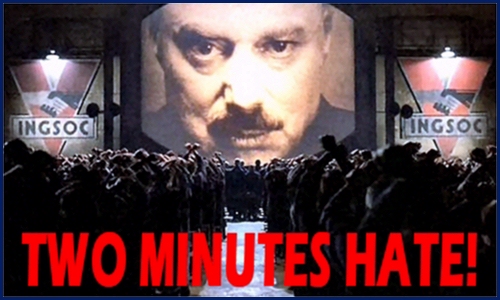
The one topic that I keep coming back to is the idiocy of our foreign policy. I don't know how much clearer it could be about how muddy and confused our actions abroad actually are. A year ago we were talking about arming and funding some so-called "moderate" rebels in their fight against Assad, supposedly the next Hitler in the making and the Emmanuel Goldstein of the day that our dear leaders wanted us to direct our 2 minutes of hate toward at that time.
Of course, we knew then that it was folly to arm these people despite the screeches from the Usual Suspects in Congress and our news media. Independent journalist Ben Swann did an in-depth look at who these rebels are that have supposedly been vetted and approved to receive US arms. He documented before any other major news network the arming of the "moderate" FSA rebels who then would take their US supplied arms and defect to the even more radical Al-Nusra Front, the al-Qaeda offshoot in Syria, who were also fighting to oust Assad. In other words, we were on the same side as al-Qaeda, the same people who we've spent hundreds of billions of dollars fighting in Afghanistan and elsewhere, in their fight to oust Syrian leader Assad. I documented this unfortunate turn of events as it was happening when I first started this blog. To say that this whole quagmire in Syria was entirely predictable is an understatement.
Now we're trying to fight a multi-front war against ISIS and the Assad regime, who is and has been fighting these uber-radicals while we were trying to take him down last year. To be clear, we're trying to partner with the same guy who was last year's Hitler to take out this year's Hitler before we eventually get back to ousting last year's Hitler again. Clear as mud, right?
But, but, ISIS is an existential threat to the US so we have to go to war this time or face being obliterated! Really? Let's put the emotion, propaganda, and hyperbole aside for a minute and get rational about this. Bruce Fein came out with an excellent piece not too long ago spelling out exactly what kind of threat ISIS is to the US.
"From President Obama on the left to Sens. John McCain and Lindsey Graham on the right, we are absurdly told that ISIS
is a clear and present danger to Americans at home, including the
installation of a caliphate to cram sharia law down our throats. Any
high school student who made such an hallucinogenic assertion would
receive a flunking grade. ISIS‘ military capability is at most an ink blot compared to the United States.
We have approximately 300 deployable battlefield ships — including
aircraft carriers and submarines capable of launching ballistic missiles
with nuclear warheads, complemented by 3,700 naval aircraft. ISIS has none. The U.S. Air Force can field approximately 6,000 aircraft with a capability of dropping nuclear bombs. ISIS has no aircraft. The United States possesses approximately 4,800 nuclear warheads. ISIS has none. The number of military personnel in the U.S. armed forces approximates 1.4 million. ISIS adherents approximate 15,000, although the number is soft. There is no agreed understanding of the earmarks of an ISIS member. The United States sports 450 active ballistic missiles. ISIS has none. The annual budget for the U.S. Department of Defense approximates $640 billion. ISIS‘ annual revenues approximate $2 billion. The U.S. population approximates 320 million. The number of persons under ISIS control approximates 2.8 million. The United States occupies 3,717, 813 square miles. ISIS controls 13,000 square miles. The United States has been engaged in perpetual global warfare since 9/11, or 13 years. ISIS is 3 years old."
Are we really terrified of being wiped out and our political system overtaken by a group of ragtag cave dwellers who have no air force, no navy, and little funding to speak of in comparison to the US? We have enough nuclear fire power to destroy the world three times over and yet we claim to be threatened by these guys? Are they brutal and inhumane in their tactics? Unequivocally, yes. But are they an existential threat to the US that demands we take immediate action in defiance of US and international law? Absolutely not.
But, but, 9/11! Oh yes. How could we forget The Incident That Justifies the Shredding of the Constitution and All Foreign Policy Actions Everywhere Abroad For Ever and Ever Amen? A commonly heard defense of our foreign policy for the last 13 years and even now for our current undertaking is that they attacked us first so we have every justification to go after them for what they did to us.
Yes, the loss of 3,000 lives on American soil is and was a national tragedy. We set out to get the perpetrators of that tragedy, who we were told was Osama bin Laden and al-Qaeda. We were then lied into another war with Iraq. We killed Saddam Hussein and finally nailed bin Laden. After funding and training the Iraqi army for several years, we were told "Mission Accomplished" for a second time. In the meantime, we killed several hundred thousand Iraqis (estimates wildly vary with upper estimates above a million but I think we can safely split the difference between a million and only a couple hundred thousand).
Please explain to me how their killing of 3000 of our citizens is an atrocity but our killing several hundred thousand people spread out over several countries is somehow ok? Given the level of anger still evidenced by many over the senseless murder of 3000 Americans over 13 years ago, can you not imagine the anger these Middle Easterners feel towards us over the murder of millions of their brothers, sisters, fathers, daughters, and sons over the past few decades? Can you imagine if these radicals went on air and said that the death of 500,000 Americans was "worth it" to advance their cause like Madeleine Albright so cavalierly declared back in the 90s after US sanctions were found to have been responsible for the deaths of almost 500,000 Iraqi children? If we are still incensed over the deaths of 3000 innocent Americans 13 years ago, can we not take a moment to imagine the depths of their anger and grief over the deaths of over 100 times as many people? And yet our only solution to improve the situation and assuage the anger of a bunch of backward ass radicals with barely a pot to piss in let alone a substantial army that can do any sort of significant damage to the US homeland is to keep dropping more bombs on them? How in the world do we think that is going to solve anything? Violence begets violence. It works on a macro level every bit as much as it does on a micro level. In the eyes of our overlords, though, if it didn't work the first two times and 24 years we tried it, we just need to go on trying it again. Kind of like QE, but I digress...
Which brings me to my final point. Let us recall, and I know this is extremely unfashionable but I must point it out, that our Constitution places war-making powers explicitly in the hands of the US Congress. In other words, the president, despite being Commander-In-Chief cannot unilaterally decide to send us into battle based on his say-so alone.
However, we find ourselves in a situation, yet again, where our president, this time a Nobel Peace Prize winning Democrat, is unilaterally launching bombing attacks on sovereign nations without any sort of debate or authorization from Congress (of course, he did this with Libya as well but that was humanitarian, you see, and the Constitution has an exception for war-making powers if done for humanitarian reasons. It's right there next to the "muskets and hunting" clause of the 2nd amendment).
Oh the president believes he has authorization. He has brazenly asserted that the 2001 AUMF that authorized George W. Bush to go after those who perpetrated the attacks on 9/11 somehow also gives authorization to bomb ISIS in Syria and Iraq (again) for beheading some American journalists. This is flimsy because it's been well documented that ISIS was kicked out of al-Qaeda for being even too extreme for them. Additionally, with OBL dead and most of the other leaders of the al-Qaeda branches responsible for planning 9/11 dead or behind bars, trying to somehow tie ISIS into being perpetrators or associated forces of those responsible for 9/11 is nothing more than wishful thinking on the Obama administration's part.
Fortunately for Obama and his law-bending minions, the United States Congress is nothing but a bunch of spineless windbags who are more concerned about getting re-elected than, you know, upholding their oath to support and defend the US Constitution where it clearly states that it is up to them to give authority for the president to go to war, not vice versa. But getting re-elected in November is way more important than reconvening Congress to do the right thing and debate this supposed ISIS threat and decide on a plausible plan of action, if any, and allocate what funds they might want to defeating this threat. Blank checks and blanket authorizations all the way!
The hypocrisy of people on both sides of the aisle is as thick as mud. On the left, you have the same people who were marching in the streets by the thousands against Bush's illegal wars who are now cheerleading Obama's same antics. This, of course, could have been said for his equally illegal intervention in Libya but somehow when you bundle a war in the fuzzy blanket of "responsibility to protect" then liberals don't seem to mind. They chastised Bush for the debt incurred based on his illegal wars and yet won't utter a peep about the tens (hundreds?) of billions of dollars a prolonged war against the shadowy enemy ISIS might incur. Interestingly, anytime I try and point these things out to liberals all I hear back is silence or a changing of the subject. I even had a friend bring up the tired and debunked "racist" epithet in response to an article I posted from the Ron Paul Institute for Peace and Prosperity. I swiftly replied, "Yet strangely he's the only game in town that doesn't want to keep bombing brown people. Get a new argument." Yes, off in liberal la-la-land, the man who has bombed 7 countries, all of them in the Middle East and Africa, is a savior and the one who has decried every one of the bombings is somehow a racist.
Not to be one-sided about things, the right is rife with hypocrisy in this matter too, of course. They're the ones who scream and rant every time Obama takes unilateral action in domestic matters, bypassing Congress to write executive orders, or just ignoring the laws he doesn't want to enforce. They liken his presidency to a monarchy by referring to him as "King Obama". They like to think they're taking the high road by occasionally paying lip service to the Constitution every once in awhile, like in the case of Obamacare, but boy, when it comes to foreign policy, they have no problem with Obama, like his predecessor, playing judge, jury, and executioner. Naturally, they still criticize Obama, but not on Constitutional matters. No, for them he hasn't acted soon enough or decisively enough. He's "leading from behind". He's showing weakness to our enemies. All of a sudden, the Constitution goes out the window. Constitution? What Constitution? "Bomb, bomb, bomb, bomb, bomb Iran!", John McCain jokingly sung to the tune of the popular Beach Boys tune, Barbara Ann.
When this newest war blows up in our face down the road as it inevitably will, you'll get to watch the grand charade of our elected officials flood the airwaves and talk about the dodgy intelligence, the weak legal basis for going to war, how expensive the war has gotten, and feign anger at the administration's handling of the war. But just remember that when it mattered most, right now at the genesis of Iraq 3.0, they were all too happy to sit on the sidelines like it was a spectator sport and avoid their Constitutional responsibility to debate and authorize any action the president could or should take in response to this regional threat. That's our foreign policy in a nutshell: clear as mud.
I made the mistake of commenting on an article I saw on Facebook the other day. For the most part, I've more or less learned to refrain from getting into arguments with strangers over Facebook or through the comment sections of articles I read. You have about as good a chance of convincing these people of the righteousness of your argument as you do in convincing Liberace that sequins and gold don't have to be wardrobe staples.
Alas, I have a fatal flaw, though, in that if I see stupid in the world, I feel the need to try and correct it. Hence this blog. Hence my futile efforts at trying to convince some avowed socialists that capitalism, far from being the cause of world poverty and hunger, has actually done more than any other system known to man to lift people and countries out of poverty.
The title of the article was Capitalism and Global Poverty: Two Billion Poor, One Billion Hungry and the little preview snippet of the article read, "The report describes the conditions produced by capitalism—mass poverty,
deprivation, social injustice, inequality, oppression—but makes no
reference to capitalism. There is simply no mention of the economic
system under which the world’s population lives, and thus no discussion
of any alternative." Oy vey.
Enter Haley, stage left: "Sorry,
wrong. Capitalism has brought more people out of poverty than any other
system. Bread lines don't happen under capitalism. Food shortages don't
happen under capitalism. Millions and millions of people starved and
died under the communist and socialist
regimes of China and Russia. Venezuela is lacking basic necessities
under their socialist regime. Sorry, you can't blame capitalism for
hunger and poverty unless you bastardize the definition of capitalism."
Then the stupid comes: "I
believe that polls show that majorities in 'liberated' Warsaw Pact
countries miss communism. They thought it was bad - until they
experienced predatory capitalism..." I'd like to see these polls and talk to some of those Chinese and Russians who lived under Mao and Stalin and see if they really did enjoy living under those regimes more than current ones. This guy here really lets me have it: "Why
is that always ignorant people defend capitalism with a counter
argument of communism? have you personally ever lived in a real
communist country? I gusse not, I am sure you have not even been across
the state line." Yeah, sure, as I write this from the Bahamas. And fortunately, no, I haven't ever lived in a real communist country as there are hardly any left in existence anymore because people have figured out that it doesn't work!
Not only does it not work, if only it were as simple as "Oops, this didn't work. Let's try something else." No, when socialism and communism fail, they take millions and millions of people down with it. In fact, apart from WWI and WWII, deaths due to communism and socialism were the greatest cause of death than any other cause in the 20th century. It's estimated that 85-100 million people died under these regimes. How are we even debating this? How are people still even thinking that socialism might be more ideal than capitalism? When capitalism fails (and of course these failures are due to government intervention) mass deaths do not happen. Worst case scenario: greedy companies run shady businesses that bilk people out of their life savings. Irrefutably immoral and reprehensible, but millions of people do not die as a consequence. Moderate case scenario: You can't afford an iPhone 5 and instead have to get the Sprint smart phone instead. Oh the horrors of capitalism.
People aren't literally starving to death in countries where they have a relatively free market. People aren't risking their lives on makeshift rafts trying to get away from their oppressive capitalist country for the shores of their communist neighbor. No! People are seeking out freedom, which is what capitalism, in its pure form at least, represents. Even in its bastardized, corporatist form that we experience today, the results are still better than they ever were under socialism.
I know there are tomes of economic texts out there and you can find any multitude of economists to support your chosen economic system, but let's put this as simply as possible. Capitalism is referred to as the free market, with "free" being the operative word here. You have a boat. I wish to buy a boat. We trade your boat for my money and bingo! That's the free market. There's no force or coercion involved to complete the transaction. We are both better off because of the transaction or else the transaction never would have occurred. I would have kept my money and spent it on something else and you would have sold your boat to someone else if one of us were unhappy with the terms of the sale. Multiply millions of transactions like this everyday and you have the flourishing of a system where people mutually benefit by acting on behalf of their own self interests. This is how our fledgling country developed from nothing to a world superpower in just over a century.
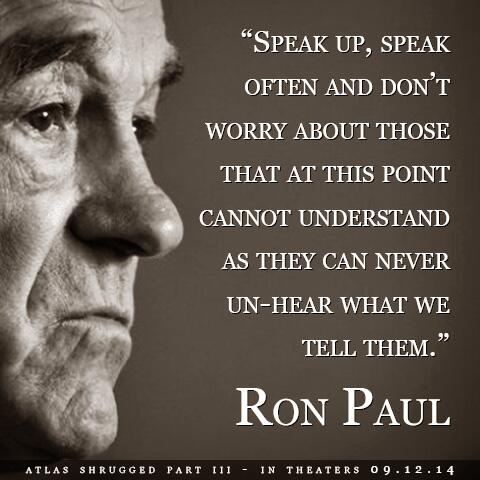
The problems arise when government starts trying to interfere with these freely entered into arrangements. Take the current example of Uber, for instance. Uber is a popular ride sharing enterprise that is starting to displace taxicabs because of its convenience and affordability. Here you have a person or enterprise trying to bring a service to the market, to fulfill a need or a void in the marketplace that they thought the taxicabs weren't filling. On the other hand, you have tens of thousands of willing customers who have found their business model to be much more appealing than the traditional taxicab and have chosen to spend their money freely with Uber. Everyone wins, right? Wrong. Despite this freely entered into business transaction, the government in some states and cities has felt the need to try and ban Uber or severely limit their business. This is a lose-lose. The entrepreneur loses out on potential income and the consumer loses out on a cheaper, more efficient mode of transportation. The only winner in this equation is the taxi cab cabal who has successfully lobbied the government to drive out their competition. Innovation and ingenuity has been stifled. The government flashed the gun hidden underneath its cloak using the implied threat of violence in order to quash this business venture and bestow favor upon another business or industry. Therein lies the problem with systems that rely on an excessive amount of government control. The government's only tool is its monopoly on violence and its implied threats thereof. That's why the communist and socialist regimes of the 20th century had such catastrophic results. Not only because these governments presumed to be above the laws of economics, as if they could avoid those laws anymore than they could avoid the laws of gravity, which had disastrous effects on supply and demand causing shortages of daily necessities resulting in mass famine amongst other things, but because their massive overreach into their economies and the free market required violence to subvert the free will of its citizens. It was because of these -what should be obvious- facts that I felt the need to go drop some truth bombs on these severely misguided people. As expected, I'm quite certain I failed to persuade anyone to step into the light. That won't keep me from trying, however. As Ron Paul has famously said, "Speak up, speak often and don't worry about those that at this point cannot understand as they can never un-hear what we tell them."
As for those who are open to learning more about the free market, capitalism, economics, and history, I have a few recommendations all brought to you by the indispensable Tom Woods who, apart from Ron Paul, is by far my favorite figure in the liberty movement.
For an introductory tidbit that requires minimal time commitment, I offer a brilliant speech that Tom Woods gave in defense of capitalism called "Why Economic Freedom? Here's Why": https://www.youtube.com/watch?v=TnS2OtzSTq0
If you want to delve a little deeper, any of Tom Woods's books are worth reading but in particular regarding this topic I would recommend Meltdown: A Free-Market Look at Why the Stock Market Collapsed, the Economy Tanked, and Government Bailouts Will Make Things Worse. And lastly, for an invaluable resource at a phenomenal price, there is the Tom Woods's Liberty Classroom: The History and Economics They Didn't Teach You. This gives you a high school or beginning college level introduction to many topics taught by actual university professors. Some of the classes include: The American Revolution, History of Political Thought, Austrian Economics Step-By-Step, U.S. History, and Introduction to Logic. Additionally, each course has a corresponding forum where you can ask the professors questions and get clarification on some of the lectures being taught. They also do a monthly webinar with the professors where you can ask your questions and have them answered live on the spot. How much would you pay to get similar courses and access in college? $5000/year? Would you believe that Liberty Classroom will only cost you 1% of that amount? For the mathematically challenged like me, that's 50 bucks. Fifty dollars gets you an awesome introductory education on topics that are more relevant than ever so you can go into a Facebook debate armed with information, for whatever good it will do you ;) A superb value if I ever saw one.
Sorry for the long hiatus, folks. Work gets in the way of what I really want to do and to be honest, I've been a tad apathetic recently towards politics. I'm a bit scandaled out, if you know what I'm saying.
Nonetheless, if there is one issue that will bring me out of the woodwork, it is the war issue. As it stands, somehow it seems we are now poised to enter into Iraq War 2.0 (or 3.0 if we go all the way back to the 90s). Why can we not just leave this country alone? What is so dang important over there that we've dedicated two and a half decades, over $2 trillion dollars, thousands of American lives, and over a million dead or displaced Iraqis, 500,000 of whom were children under the age of 5 that, we cannot remind you too often, Madeleine Albright once so cavalierly proclaimed were "worth it"?
Yet these architects of destruction, the ones who went out and either told bald-faced lies or were just grossly misguided, are back on the stump trying to get us to go back in and finish the job. Here's a novel idea, if you're in politics and you get something wrong, like way wrong, you don't get to still consider yourself an expert or any sort of authority on the subject which you completely screwed up. Republicans always like to compare government to the private sector by saying things like, "If a private enterprise ever went 50% over budget and didn't produce results, someone would be fired." Well what about if a private company went over budget by $1.9 trillion dollars and about 8 years? Someone would be fired, sued, and maybe even in jail. But, Washington being Washington, the more wrong you are about something the more of the spotlight they tend to give you (Paul Krugman and Ben Bernanke, I'm looking at you).
Jon Stewart on The Daily Show did an epic segment highlighting just how wrong Dick Cheney and his ilk have been on this whole Iraq situation. I hardly pay any attention to The Daily Show anymore but he nails it in this piece, "Now That's What I Call Being Completely F*cking Wrong About Iraq!"
What gives me a glimmer of hope now is how many right wing commentators who previously supported the Iraq war as sold to us in the Bush years are now calling Cheney and his cronies out for being wrong about Iraq. They recognize the war as a folly and realize that despite our supposed good intentions, the cost is too great. Megyn Kelly of Fox News took Dick Cheney to task for his role of promoting the Iraq War admonishing him that "...time and time again history has proven that you got it wrong in Iraq as well, sir".
Glenn Beck has also come out in opposition of the Iraq war. In a lengthy monologue on his radio show, Beck had this to say:
Now, in spite of the things I felt at the time when we went into war,
liberals said: We shouldn’t get involved. We shouldn’t nation-build.
And there was no indication the people of Iraq had the will to be free. I
thought that was insulting at the time. Everybody wants to be free.
They said we couldn’t force freedom on people. Let me lead with my
mistakes. You are right. Liberals, you were right. We shouldn’t have.
Now, if you believed those things, let me say: You were right. If you
were just using it for political purposes, well, we don’t have anything
in common, But if you really believe those things, I would like to have
a conversation with you now to find out exactly how you came to terms
with that – especially being a progressive. If you know the history of
the progressive movement, it was Theodore Roosevelt and Woodrow Wilson
that started imposing democracy in South America. The reason why South
America is just loaded with communists is because we put a lot of them
in. That’s the progressive ideal.
But I agree with you: You cannot force democracy on the Iraqis or
anybody else. It doesn’t work. They don’t understand it or even really
want it. They may be too immersed in their own belief of Sharia Law to
embrace liberty or at least at this time. If people vote for Sharia Law,
they vote for Sharia Law. We tried. What can we do? We have lost
thousands of American lives. We have lost thousands of lives on the
Iraqi side and tens of thousands have been wounded. We have spent $2
trillion – say that again – $2 trillion, and upwards of 200,000 Iraqi
citizens, aid workers, insurgents have been killed. That’s the
conservative number. Liberals will tell you it’s almost 1 million
people. I don’t know what the number is, but after all of that, hundreds
of thousands of lives, $2 trillion, the best minds in the world trying
to do it, it’s about to fall apart...
But, anyway, all of that is gone. And yet, this is something I think
that we can come together with, on the right and the left. And it’s this
– I have more of a chance of hacking off my loyal listeners and
audience by saying this, but so be it: Not one more life. Not one more
life. Not one more dollar, not one more airplane, not one more bullet,
not one more Marine, not one more arm or leg or eye. Not one more.
The people of Iraq have got to work this out themselves. Our days of
being the world’s policemen, our days of interventionists is over. If we
are directly attacked, so be it. But this must end now.
Bam! What a change of tune from the Glenn Beck of old. The cherry on top, however, is the conservative standard himself, Ronald Reagan's son, Michael, coming out and apologizing for his support of the Iraq war in the early days, “As a conservative who supported the war in Iraq and my president, I
apologize to all of the families of those killed or wounded in
Iraq. Going to war in Iraq seemed so right at the time. But I didn’t
think it through and neither did Washington. Next time, I promise I’ll
know better.”
So what's wrong with the rest of the world? I've had many conversations with people who still don't see what the hubabaloo is, who don't believe that the Bush/Cheney administration lied, who believe that there were WMDs but that they were moved to Syria or we just didn't have enough time to find them, that Iraq was harboring terrorists, that they were training al-Qaeda, and pretty much every other lie trotted out to sell us the Iraq war.
Let me tell you something, even as a young, naive 20 year old college student I could see through the bullshit a mile away. When your president can't give you one good reason and instead has to sell you on 4 mediocre (read: BS) ones, that's not a good enough reason to waste lives or money to go to war. Clearly that does not represent an imminent threat.
Will we make the same mistake again by further immersing ourselves in a region that has been in conflict for a millennium? Do we have the hubris to believe that we can swoop in and magically solve a problem that they haven't been able to solve themselves in almost their entire history? Does "finishing the job" mean we leave troops there always and forever until there is peace in the Middle East, even if that doesn't look likely within this century? Does any of this have anything to do with national security or is it just in our national interests (they are not one and the same)?
Fortunately, there are some in the Republican party, like Rand Paul, who are trying to wrest control of the party away from neocon and uber hawk stalwarts like John McCain and Lindsey Graham and return it to the conservative principles upon which it was founded, not the bloated, multi-tentacled monster wreaking havoc abroad and squeezing us at home but which we're still told represents GOP-style "small government". Rand has been doing the rounds urging a more sensible foreign policy based on Constitutional principles and Congressional oversight. Will we see the return of the anti-war left, missing since 2008, finally stepping up again and allying with their libertarian counterparts to prevent further folly? Will sounder minds prevail or will we be once again bamboozled by our dear leaders into wasting another few hundred billion dollars and putting lives at risk for a region that has no desire to fight for freedom on their own? Like the saying goes, "Fool me once, shame on you. Fool me twice, shame on me." How foolish will we be?
I've been following the Cliven Bundy story pretty much since the get-go, including live tweeting the most tense parts of this saga during the standoff between the BLM and the militia groups that rose to his defense. I've been too busy to blog about it until now and I've got a few things to say.
1) This is gross overreach by the BLM and the federal government pure and simple.
Supposedly Mr. Bundy owes the federal government more or less a million dollars in grazing fees dating back to 1993 when he stopped paying. Ok, that might be true. I don't have time to delve into the intricacies of the law and what the various court proceedings have been over the decades. Here is what Mr. Bundy and his family have to say about the fees and the whole situation. What I do know is that no private citizen could EVER legally show up at someone's property with a bunch of armed thugs and threaten violence against someone's person or property in order to satisfy a debt. Those are tactics reserved to the Mafia and ganglords, and the BLM and our government never resorts to those types of heavy-handed tactics, right? Right? Of course that's not right. Violence and threats of violence are the only tools a government has. They can only enforce their decrees at the barrel of a gun. And you know how the old saying goes, "When your only tool is a hammer everything begins to look like a nail".
People forget, the government works for us, not the other way around. Why should Mr. Bundy pay this agency to "manage" him off his land like they did every other rancher in the area? Once again, I'm sure there is an appropriate Mafia comparison to be made here. Hey Guido, you must pay us to "protect" your business and you must continue paying us even if your business declines and if you stop paying us to protect your business, we'll break your legs and burn your business to the ground. Capisce?
2)Mr. Bundy is not a welfare rancher.
Those of the liberal persuasion are trying to paint Mr. Bundy as some sort of a "welfare queen" because he has been using public lands to graze his cattle without paying for it. "He's been using public land to graze his cattle and not paying for it!", they scream. "He owes us!", they howl.
He doesn't owe us squat. He's been doing more to that land than you, I, or the federal government ever has. I don't care when the deed for his property was taken out. He claims his family has been there since the 1800s. I don't care that supposedly they didn't sign the deed until the mid 1900s. Who has been there working the land, cultivating it, irrigating it, and homesteading it, the government or the Bundy family? Who has produced more value out of the land, Mr. Bundy by grazing his cattle which will be used to feed people and produce direct and indirect jobs due to his use of the land or the government who by magical decree drew some lines on a map, waved a wand, and declared it "theirs" despite letting it sit untouched (except for the nuclear bombs they've been detonating underground) for over a century?
Indeed, philosopher John Locke had some prescient thoughts on property rights even as far back as the 17th century, as disputes over property are as old as mankind. In a great synopsis of his life and work by the Foundation for Economic Education (FEE), there were several paragraphs dedicated to Locke's views on property rights in relation to government:
"Locke established that private property is absolutely essential for liberty: “every Man has a Property in his own Person. This no Body has any Right to but himself. The Labour of his Body, and the Work of his Hands, we may say, are properly his.” He continues: “The great and chief end therefore, of Mens uniting into Commonwealths, and putting themselves under Government, is the Preservation of their Property.”
Locke believed people legitimately turned common property into private
property by mixing their labor with it, improving it. Marxists liked to
claim this meant Locke embraced the labor theory of value, but he was
talking about the basis of ownership rather than value.
He insisted that people, not rulers, are sovereign. Government, Locke
wrote, “can never have a Power to take to themselves the whole or any
part of the Subjects Property, without their own consent. For this would be in effect to leave them no Property at all.” He makes his point even more explicit: rulers “must not raise Taxes on the Property of the People, without the Consent of the People, given by themselves, or their Deputies."
Locke had enormous foresight to see beyond the struggles of his own
day, which were directed against monarchy: “’Tis a Mistake to think this
Fault [tyranny] is proper only to Monarchies; other Forms of Government
are liable to it, as well as that. For where-ever the Power that is put
in any hands for the Government of the People, and the Preservation of
their Properties, is applied to other ends, and made use of to
impoverish, harass, or subdue them to the Arbitrary and Irregular
Commands of those that have it: There it presently becomes Tyranny, whether those that thus use it are one or many.”
Then Locke affirmed an explicit right to revolution: “whenever the Legislators endeavor to take away, and destroy the Property of the People,
or to reduce them to Slavery under Arbitrary Power, they put themselves
into a state of War with the People, who are thereupon absolved from
any farther Obedience, and are left to the common Refuge, which God hath
provided for all Men, against Force and Violence. Whensoever therefore
the Legislative shall transgress this fundamental Rule of Society; and either by Ambition, Fear, Folly or Corruption, endeavor to grasp themselves, or put into the hands of any other an Absolute Power over the Lives, Liberties, and Estates of the People; By this breach of Trust they forfeit the Power,
the People had put into their hands, for quite contrary ends, and it
devolves to the People, who have a Right to resume their original
Liberty.”
According to the Lockean view, if Mr. Bundy and his family have mixed their labor with the property and improved it, then the property is, by this definition, theirs ("The Labour of his Body and the Work of his Hands...are properly his.") The Bundys have spent decades doing so whereas the government, in this instance, has not. This is what Mr. Bundy is referring to when he says the property is theirs "by preemptive rights by beneficial use". For the government then to swoop in and claim that it's "their" land and that Mr. Bundy owes them money for the privilege of continuing to work and develop the property is ludicrous. Hence Locke's view that government "can never have a Power to take to themselves the whole or any
part of the Subjects Property, without their own consent. For this would be in effect to leave them no Property at all.”
Given this view of the dispute, Mr. Bundy and his supporters are affirming the remedy offered by Mr. Locke in instances such as these that, “whenever the Legislators endeavor to take away, and destroy the Property of the People,
or to reduce them to Slavery under Arbitrary Power, they put themselves
into a state of War with the People, who are thereupon absolved from
any farther Obedience, and are left to the common Refuge...against Force and Violence." The militias who rallied around Mr. Bundy innately understood this right to revolt against the BLM who "endeavored to take away and destroy the Property of the People..."
Just as the monarchs of old who would claim large swaths of land as "theirs" despite their never having set foot there or worked the land or produced anything of benefit or value from the land, so it is with our federal government and the BLM arrogantly stating that the land is "theirs" and Mr. Bundy must continue to pay for the privilege of being able to continue to graze his cattle there.
Which brings us to the point of property ownership. Let's forget the Bundys for a moment and just think of this in terms of any normal property "owner". Most of us get a 30 year mortgage in which we take that time to pay the bank off, with interest, during that span. Technically, while we're still paying off the mortgage, it could be said that we don't actually "own" the property outright.
What about once it's paid off, though? We own it then, right? WRONG. There's a little thing called property taxes. One must pay these forever and ever even long after one might have acquired outright "ownership" of their property. What happens if you stop paying these taxes? Well, something similar to what's been happening to Mr. Bundy in that some state or federal agents will show up at your home one day and kick you out of your property. It doesn't matter that your debt has been settled with the bank or the original creditor or that the property has been in your family for generations, you are forever in debt to the government. You see, you don't actually "own" your property. The government is just so benevolent as to let you continue to "rent" it from them so long as you pay your taxes. If you quit paying your taxes, then the government swoops in and collects what is rightfully theirs. If you actually owned your property, they wouldn't be able to do this.
Needless to say, most people don't understand these concepts. It's easier for the media and the unthinking masses to believe that this man is just mooching off of the rest of us tax-paying, law-abiding slaves, I mean, citizens and to demonize a man who dare stood up to the injustice of a federal agents trying to destroy and damage the property he's spent a lifetime nurturing and improving.
3) I don't care IF Mr. Bundy is a racist
Never one to miss a race-baiting moment, the national media has seized on some of the comments Mr. Bundy uttered in which he dared to wonder aloud if the plight of today's black community, enslaved in poverty by the entitlements given by the federal government, are actually no better off than when they were actual slaves working the plantations.
His statement was certainly not made very eloquently, to say the least, but that's not to say there weren't big boulders of truth in what he said. Indeed, many prominent black leaders have been saying the exact same thing for years. Is it only okay for black people to speak these truths? If so, here are a couple of black leaders affirming Bundy's own words. Are they racist too? Demonstrating some self-loathing?
Regardless, it doesn't matter in the issue regarding this man's property. His words make his case no less valid. Do racists not deserve equal protection under the law? Are racists afforded no rights? Do racists deserve to have their property taken from them? Is there a 'racist' exemption under the 1st, 2nd, 4th, or 5th amendments? It. Does. Not. Matter. It is a distraction from the issue at hand and I will not back down from my support of this man in his plight even IF he is a racist. One can reasonably disagree with his words on black people and slavery and still be able to support his cause. The two are not inextricably related.
4) Where is the outrage for the government's criminal actions?
Ok, Mr. Bundy uttered some racially insensitive words. Can anyone tell me who he has actually harmed? Can anyone point out a direct victim of Mr. Bundy's actions? Sure, some might conjecture that his withholding of his money prevented a bridge somewhere from being built or some textbooks being bought for a school. But one could also say that his withholding the money saved lives. By the same token, he might have prevented the federal government from drone bombing another wedding in Yemen and killing innocent children.
Speaking of which, why are liberals more outraged over this man's words and this man's plight than they are over the myriad crimes, actual deeds with actual identifiable victims, committed by the Obama administration? Here, here's a list of some of the youngest victims of Pres. Obama's secret drone murder program. Why isn't Rachel Maddow doing show after show on that? Why isn't Jon Stewart ridiculing and lambasting a president who has verifiably murdered hundreds of children in the Middle East based on secret evidence and a secret program that anoints the president, against our Constitution and any reasonable interpretation of state, federal, and international law as judge, jury, and executioner? Anyone care to explain that to me?
I've seen Twitter comments from the far left advocating for the government to just go ahead and drone bomb the Bundy ranch/family. If only the same vitriol were used against the same person who has been responsible for hundreds of drone murders all across the Middle East against countries we're not even at war with.
The government can lie to us, spy on us, steal our wealth and the fruits of our labor and nobody bats an eye. One man defends his property against government thugs and utters some allegedly racist words and everyone loses their friggin' mind. How do you like your cognitive dissonance in the morning? Scrambled or fried?
5) Last but not least
Finally, I'll say this to those people on the left and on the right who disagree and have done so from the beginning with Mr. Bundy. Even if, for argument's sake, Mr. Bundy is entirely wrong and he owes the government a million dollars and he is just being an obstinate, curmudgeonly bastard, by what right does the BLM have to show up in arms to settle this dispute? They showed up first with guns in hand. Mr. Bundy did not greet them surrounded by a militia and say "Come and take it". There were reports of government snipers on the ground from the very get-go. You DO NOT show up with armed henchmen to settle a property dispute. Period. End of story. Even if Mr. Bundy is in violation of the law, do he and his family deserve to be murdered by government thugs over it? NO!
Just think for a moment, if the federal government were not involved in this situation, would there even be a problem? No. Mr. Bundy is grazing his cattle, something that people have been doing for centuries now. The government is the one making the noise and beating their chest over this issue. Nobody has issued a complaint about Mr. Bundy. Mr. Bundy has not harmed anyone. There is literally no issue here except the one that the government wants to make an issue.
Mr. Bundy and the militias that rallied to his side only did so in reaction to the heavy handed tactics that were clearly being attempted by the government. And had they gotten away with it, would it now be the precedent for every BLM contested property dispute? Thank goodness for the 2nd amendment in which the citizens are permitted to bear arms to prevent tyrannies like this from escalating like they did in Waco and Ruby Ridge. Does anyone actually think the government would have backed down if there were not armedcitizens on standby? The 1st amendment doesn't mean a thing without the 2nd amendment. We Americans, unlike much of the rest of the world, have a right to bear arms in self-defense of our person and property; thank goodness our 2nd amendment does not force us to show up with knives to a gun fight.
The situation is still fluid in Nevada and I will continue monitoring this situation closely. Although I might not blog about it again, I will still be tweeting about it and posting about it on Facebook. We would do well to remember that the government works for us, we do not work for the government. They are our servants, not our masters. Too many have forgotten this fact. We must persist in our efforts to remind them.
As some of you might have noticed by glancing over the 'About Me' section on the sidebar, my real job is working as a yacht stewardess, which I've been doing for the last eight years. I'm currently in the Bahamas where I've been for almost 2 months now (and which also explains the diminishing frequency of my posts cuz I've been busy y'all!) and have had two interesting and instructive recent interactions in the area of wages and commerce that I think we can glean some knowledge from.
**Scenario 1**
The first instance occurred today, actually. We have a trip coming up on Saturday and in our final preparations to get the boat super shiny and clean for the boss, we were looking for an extra hand. We told the dockmaster up front that we would pay $20/hour and to let whoever he sent our way to let him know in advance. A guy shows up a little while later and starts sizing up the boat, walking down the dock trying to gauge the length of it and counting the number of decks etc. Our first mate stopped him and let him know up front that we were paying $20/hour and that the dockmaster should have told him that up front before sending him down.
"Nah, nah man. How many decks you got? I get paid $2.50 a foot man", was this Bahamian's reply to our offer. Our boat is 130' feet so he wanted $325 for what could have been anything between 4 and 7 hours work, or apprx. $45-80 an hour.
"Sorry bro, $20 bucks an hour is what it is, take it or leave it."
Well, believe it or not, this Bahamian decided it wasn't worth it and turned down the work, deciding he would rather be unemployed for the day than to work for 6-7 hours at $20/hour and get a free lunch out of it too. We decided, based on prior experience, that most Bahamians, or any dayworker really, are not worth more than $20/hour and that we could manage the work on our own rather than employ someone for more than that.
**Scenario 2**
We've been experiencing some mechanical and electrical issues recently, nothing new on a boat, something's always broken. Being in the islands, it's really difficult to get reliable and quality help on some of these things. There is one electrician on the island and in the yachting community who has a reputation for being an EXCELLENT electrician and who is also reliable and hard-working. He knows this and therefore he knows he can charge an arm and a leg for his services. Recently, he was supposed to arrive at the boat at 8:30. An hour later he still hadn't arrive but did call our engineer and told him there was an emergency that he got called away to while he was en route to our job and that he would be there at 10am.
He showed up at 10am, as promised, and he and the engineer sorted out the problem by noon. He said his going rate was $80/hour and we owed him for 4 hours work.
"Four hours work? How did you come up with that?" asked our incredulous engineer.
"I charge for travel time to and from the boat. I left at 8am and finish at noon, that's four hours."
Nevermind that during his drive time he veered off to help another vessel. Nevermind that most people don't charge for drive time. He also casually informed our engineer that he's raising his rates to $120/hour in the near future. But, our engineer figured, he is the best electrician on the island, he did sort the problem out, and he has dropped everything and come and helped us in an emergency situation before too. Alright, $320 bucks it is then!
So what can we learn from these scenarios?
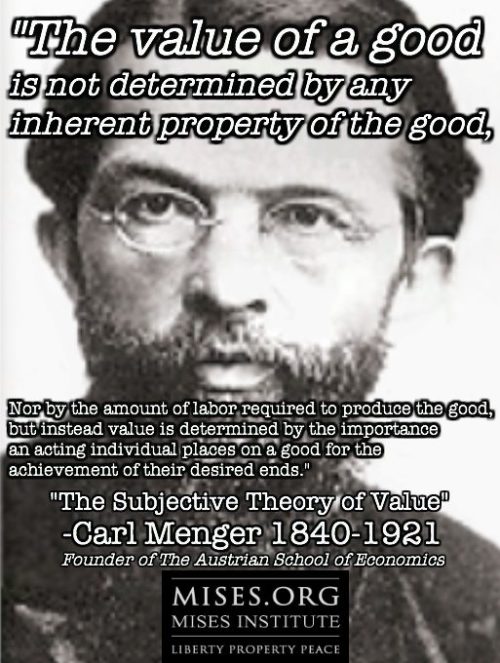
Value is Subjective
In scenario 1, for whatever reason, the Bahamian worker thought $20/hour was not enough to entice him away from whatever other stuff he could have been doing that day. Sort of like supermodel Naomi Campbell, he doesn't get out of bed for less than $300 a day apparently.
And from our end, we knew from experience that his productivity would not be worth more than $20/hour so we both mutually decided we would not go through with the transaction and both parties walked away, maybe somewhat disappointed, but overall no worse for the wear.
We didn't need some nameless, faceless government agency ruling over this interaction telling us that we MUST offer him more money or pay him a living wage or anything like that. Most of my American friends were shocked he turned that kind of money down, and we were too since it's not exactly raining jobs here in the Bahamas, but hey, that's his choice based on his own subjective set of values. No government interference (force) necessary.
In scenario 2, now we find a situation in which we did find it of value to pay the electrician his $80/hour AND go along with his four hours of work malarkey. He's got the market cornered and he knows it. Now, will we continue to use him knowing he's going to raise his rates to $120/hour? Hmm, maybe only in an emergency. We might find a better value hiring someone else moving forward, but that's our call. If the electrician's business drops off too much, he might lower his rate to find a better equilibrium, but that's his call.
Other electricians might also see him as an example and start emulating his work ethic (although you can't fake real knowledge and skill and consumers will notice that sooner or later) but if they're qualified as well they might start to eat into the electrician's business and might put market pressure on him to lower his rates. All these scenarios are okay and, once again, these are all things that are none of the government's business. Gotta love the free market!
What shouldn't happen is the government shouldn't give in to cries of any cabal of workers who might gang up on this shining star and demand price controls and equal workload or work pay regulations or force this guy to join a group of workers whereby they distribute the work fairly amongst them all. There are countless modern day and historical examples where government tries to interfere in the business environment to make it "fair" and supersedes the natural market forces that arise from two parties who are free to make business decisions that best suit each party mutually like in the above examples.
For politicians, though, really it boils down to pandering for votes. If a group of many workers is angry that one certain worker or one certain business is running circles around them and they petition the government to "do something", well the politician measures up how many votes he/she will receive to appease the "do something" crowd vs. the number of votes he/she will receive from allowing that person to continue operating as normal; usually the "do something" crowd has far more numbers on their side and so something "gets done" to the detriment of the other party. Either that or the politician has a connected friend in the industry and offers laws and regulations to benefit that connected friend in exchange for campaign donations, once again to the detriment of the other party. Gotta love democracy!
But I digress. I believe there are many other lessons to be learned from the above exchanges but for the sake of brevity, I'll end it here. I'd like to hear from you. Did you find anything instructive in either of those scenarios? If so, what?
**Update: After we sent away the dayworker from the first scenario, the dockmaster then ended up getting his son, who was probably about 20ish, to come over and help. He, obviously, was happy for the money and he did a good job for us too. Value is subjective.